






AI adoption succeeds when organizations manage behavioral change with the same rigor they apply to technology deployment.This article provides a complete change management blueprint for enterprise AI adoption, with a specific focus on Microsoft 365 Copilot, that combines role based training, a structured champions network, and a measurement system that business leaders and finance teams trust.
Artificial intelligence is no longer experimental inside most enterprises. The challenge leaders face today is not access to AI technology but sustained employee adoption that delivers measurable business value. Without intentional change management, even the most advanced AI platform will fail to produce lasting outcomes.
Why AI adoption fails even when the tool works
Most AI adoption initiatives fail for reasons that have very little to do with model quality or system performance. In many organizations, AI-powered tools are deployed as if they were traditional software upgrades rather than catalysts for organizational change.
A typical pattern looks familiar. Licenses for Microsoft 365 Copilot are enabled. A kickoff session introduces the capabilities of generative AI. A follow up email shares a few prompting tips. Initial curiosity drives short term usage, but within weeks, adoption drops sharply.This pattern appears not only with Microsoft Copilot but also across deployments of Google Workspace AI, Salesforce Einstein, and tools built on OpenAI models. The AI systems function as designed, yet employees struggle to integrate them into daily work.The root cause is simple. Organizations treat AI adoption as a feature rollout instead of a change management process. Employees are expected to adapt on their own while continuing to meet performance expectations under real world pressure.Real work is complex and unpredictable. Employees encounter permission barriers governed by Microsoft Entra, inconsistent outputs from generative AI, uncertainty about responsible use policies shaped by ISO and NIST, and fear of making mistakes that could expose sensitive data. When people are unsure what is allowed, hesitation replaces experimentation. Hesitation prevents habit formation. Without habit, AI never becomes part of normal business operations.Leaders then conclude that employees are resistant or disengaged. In reality, the organization failed to design adoption intentionally.Microsoft’s own guidance reinforces this point. The Microsoft Learn content and the Microsoft 365 Copilot Adoption Playbook describe adoption as a phased program that includes readiness, enablement, reinforcement, and measurement. Copilot adoption is not a one time launch. It is a structured change journey.There is also a second reason adoption fails that leaders frequently underestimate. AI increases the speed of work, but it also increases the speed at which mistakes can propagate. This dynamic creates anxiety across the human workforce. Employees slow down when they are uncertain, and that slowdown directly undermines adoption. Effective AI change management exists to remove uncertainty, not to create excitement.

The adoption shift leaders must sponsor
Sustained AI adoption requires leaders to actively sponsor a shift in how AI is positioned, supported, and measured across the organization. This sponsorship is not symbolic. It must be reinforced consistently through communication, prioritization, and management practices.
Shift one: From broad experimentation to specific daily moments
Employees adopt AI when expectations are specific. General encouragement to try AI feels optional and is easily ignored during periods of task disruption or high workload.
Leaders must clearly articulate the specific moments in the workday where AI is expected to be used. Examples include drafting first responses to customer emails, summarizing meetings immediately after they end, generating outlines before writing reports, or preparing first pass analyses for review. When AI usage is anchored to identifiable daily tasks, employee adoption increases because expectations feel concrete rather than aspirational.
Shift two: From prompting tips to workflow playbooks
Most employees do not want to become experts in prompting techniques. They want to complete their own work more efficiently and with fewer errors. AI change management should therefore focus on workflow playbooks rather than abstract instruction.
Workflow playbooks translate AI capabilities into repeatable steps embedded within existing processes. For example, instead of teaching how generative AI works, a playbook shows how to use Copilot to prepare a weekly finance commentary in Microsoft Excel or how to draft a proposal in Microsoft Word using approved templates.
Shift three: From anecdotal value to measured impact
Finance leaders fund initiatives that are supported by data driven decisions. Stories about perceived value are not sufficient. Measurement must include baselines, usage tracking, and outcome metrics.
This expectation aligns with guidance from Gartner, Forrester, and McKinsey & Company, all of which emphasize measurable outcomes in digital transformation and AI integration programs.
The three adoption layers: behaviors, workflows, and outcomes
Effective AI change management treats adoption as a system with three interdependent layers. Each layer must be addressed intentionally to produce sustainable results.
Layer one: Behaviors
Behaviors are the repeated actions employees must take for AI to matter. These actions are often small, but they compound over time. Examples include using AI to generate a first draft instead of starting from a blank page, asking Copilot to summarize long email threads, or using AI to extract key insights from meeting transcripts.
Behavioral change is the foundation of AI adoption. Without consistent behavioral shifts, no workflow or outcome improvements can occur.
Layer two: Workflows
Workflows represent the business processes where AI can meaningfully support teams. Common examples include proposal creation, service ticket triage in ServiceNow, contract review, HR policy responses, financial analysis, and knowledge management in Confluence.
Embedding AI into workflows ensures that usage is not dependent on memory or motivation. Instead, AI becomes part of how work is performed.
Layer three: Outcomes
Outcomes are the measurable improvements leaders care about, including reduced cycle time, improved quality, lower cost, reduced risk, and improved employee sentiment. These outcomes provide the evidence needed to sustain funding and executive support.
The most common mistake organizations make is attempting to measure outcomes without first shaping behaviors and workflows. High performing AI adoption programs reverse this sequence. They define behaviors, embed them into workflows, and then measure outcomes.This layered approach aligns with structured change models such as Prosci ADKAR, which emphasizes awareness, desire, knowledge, ability, and reinforcement as prerequisites for successful change.
Training design that creates daily usage habits
Training is one of the most visible components of AI change management, yet it is also one of the most frequently misused. Generic training that focuses on features and capabilities rarely leads to sustained adoption.
Effective AI training is designed to support the human side of change and to create habits that persist beyond the classroom.
Role based training
Training must be tailored to job roles and responsibilities. A single session for the entire organization inevitably becomes too abstract to be useful. Instead, organizations should deliver separate training for service desk teams, sales, finance, HR, operations, and leadership.
Role based training ensures relevance and reduces cognitive load. Employees are more likely to adopt AI when examples mirror their daily tasks.
Workflow anchored instruction
Training should be anchored to workflows employees already perform. People do not adopt AI in the abstract. They adopt faster ways to complete familiar work. Teaching Copilot in the context of preparing reports, responding to customers, or analyzing data creates immediate relevance.
Reusable assets and templates
Every training session should produce tangible assets that employees can reuse immediately. These assets may include prompt packs, templates, checklists, or example outputs. Reusable assets lower the barrier to continued use and reduce dependency on memory.
Practice and reinforcement
One time training sessions rarely produce lasting behavior change. Habit formation requires repetition. Reinforcement mechanisms such as office hours, follow up sessions, and practice challenges ensure that employees continue to use AI in real scenarios.
This approach is consistent with guidance from Harvard Business Review, MIT Sloan Management Review, and World Economic Forum, all of which emphasize experiential learning in digital transformation initiatives.
Champions programs that scale confidence and reduce risk
Champions programs are one of the most effective mechanisms for scaling AI adoption across large organizations. Champions act as trusted peers who reinforce safe usage, surface friction, and provide practical support.
What defines an effective champion
Effective champions are respected by their peers and grounded in day to day work. They are not selected for technical expertise alone. Instead, they are chosen for credibility, curiosity, and a willingness to share both successes and failures.
What champions do in practice
Champions collect real examples of AI usage, both positive and negative. They help peers apply prompt packs and workflow playbooks. They surface recurring issues related to access, permissions, or policy. They reinforce responsible use guidelines without creating fear or compliance fatigue.
How champions reduce organizational risk
Research from OECD and the International Labour Organization highlights the risks of informal workarounds during periods of technological change. Champions act as human guardrails, helping employees stay within approved workflows while enabling governance teams to respond quickly to emerging issues.
Communication that sounds human and drives action
AI communication often fails because it sounds like marketing rather than guidance. Employees do not need hype. They need clarity, reassurance, and direction.
Effective AI communication follows three patterns. First, it tells employees exactly what to do this week. Second, it clearly states what is allowed and what is not. Third, it provides proof through real examples and measured outcomes.Stakeholder engagement principles from the Project Management Institute and benchmarking insights from APQC reinforce the importance of clarity and consistency in change initiatives.External research can be used to set expectations, not to promise results. For example, a study from the National Bureau of Economic Research found productivity improvements in customer support settings using generative AI. Such findings should be framed as context rather than guarantees.
Measurement that finance trusts: baseline, usage, and impact
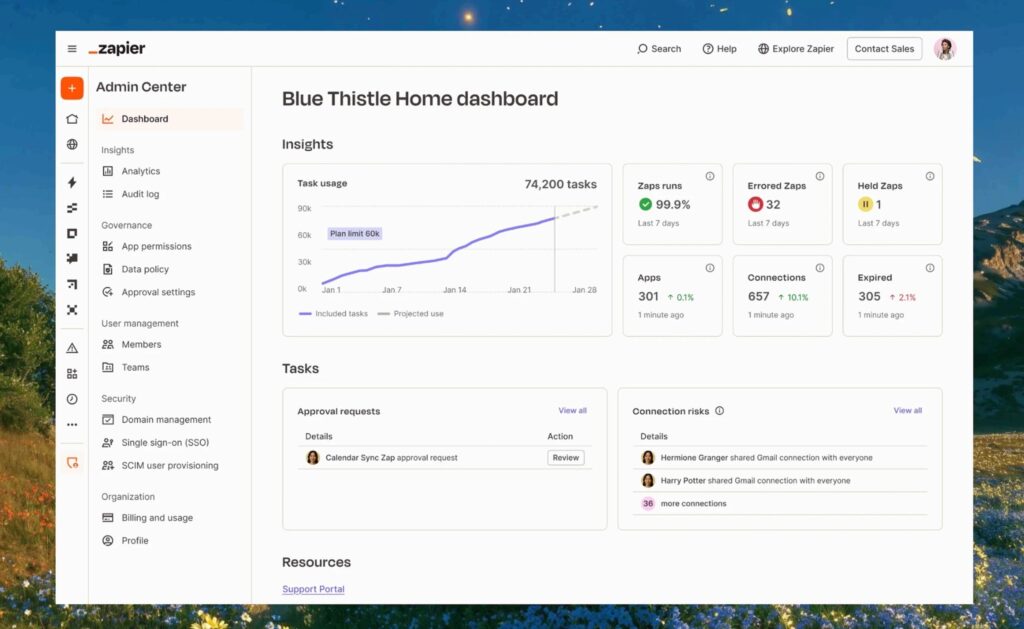
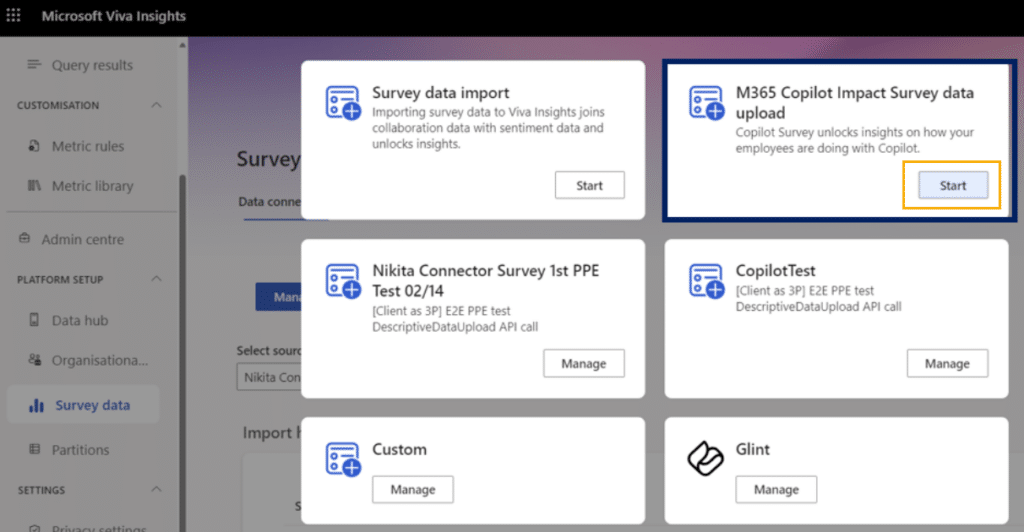
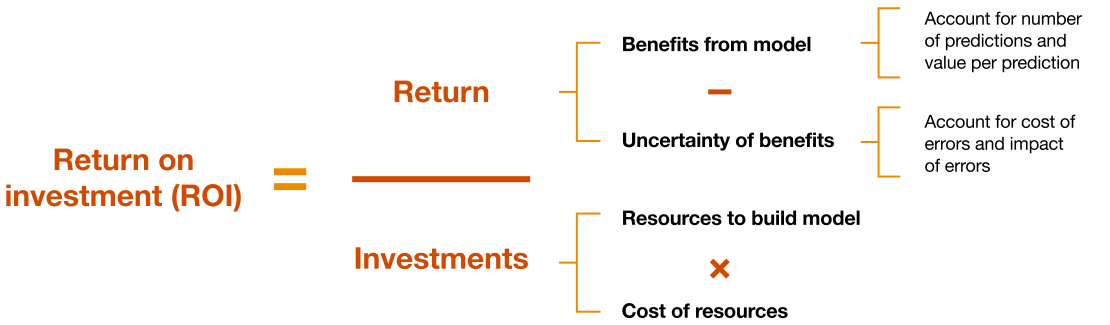
Measurement is the bridge between AI experimentation and sustained investment. Finance teams expect measurement systems that are credible, repeatable, and auditable.
Establishing baselines
Before any pilot begins, baseline metrics must be captured for targeted workflows. Without baselines, organizations cannot demonstrate improvement and will struggle to secure continued funding.
Tracking usage and adoption
Usage metrics should include active users, repeat usage, adoption by application, and template utilization. Tools such as Viva Insights, Power BI, and reporting in the Microsoft 365 admin center provide visibility into adoption patterns.
Measuring impact
Impact measurement focuses on workflow outputs and business outcomes. Examples include reduced cycle time, lower rework rates, improved quality, and reduced risk events. Sentiment data gathered through Viva Pulse can supplement operational metrics by capturing employee confidence and perceived value.
Finance professionals aligned with standards from the CFA Institute expect this level of rigor.
The 30 day adoption sprint plan
This sprint is designed to create habit, reduce risk confusion, and produce early proof.
Week 1 Define the scope and build the assetsPick two workflows per role groupCreate three prompt packs per roleDefine simple “allowed and not allowed” guidanceSelect champions and give them trainingWeek 2 Train and launch the habit loopRun role based sessionsLaunch a weekly practice challengeStart office hoursShare the first set of internal examplesWeek 3 Measure, fix friction, reinforceReview usage in dashboards and reports Microsoft Learn+1Fix the top three friction pointsPublish a short update: what is working, what is changingRecognize champions and early adoptersWeek 4 Publish proof and expand within the same workflowsShare baseline versus pilot metricsShare one story per role groupExpand within the same workflows before adding new onesKeep office hours and reinforcement going
The 90 day scaling plan
The following sixty days transform initial success into a sustainable program.
During days thirty one through sixty, organizations standardize templates, clarify governance, expand the champions network, and onboard a second wave of users for the same workflows. During days sixty one through ninety, leaders publish executive scorecards, request funding based on measured improvements, and introduce new workflows only after existing ones are stable.Enterprise scaling patterns described by Deloitte, PwC, EY, and KPMG reinforce this disciplined approach.